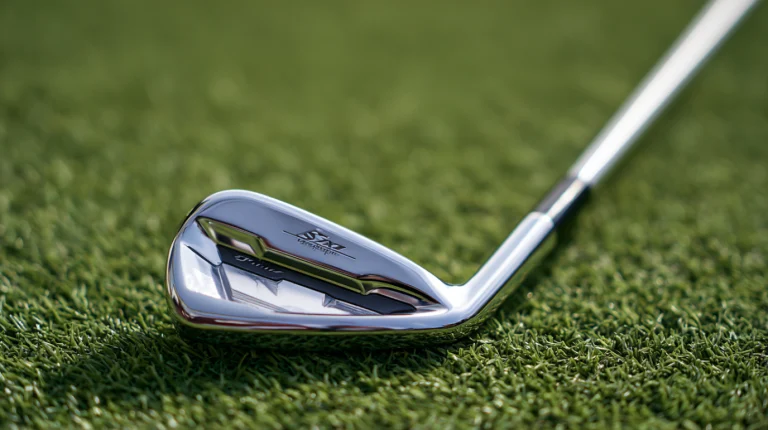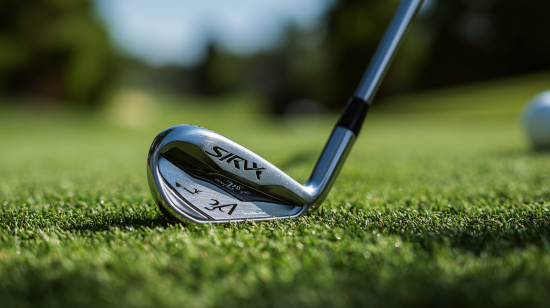

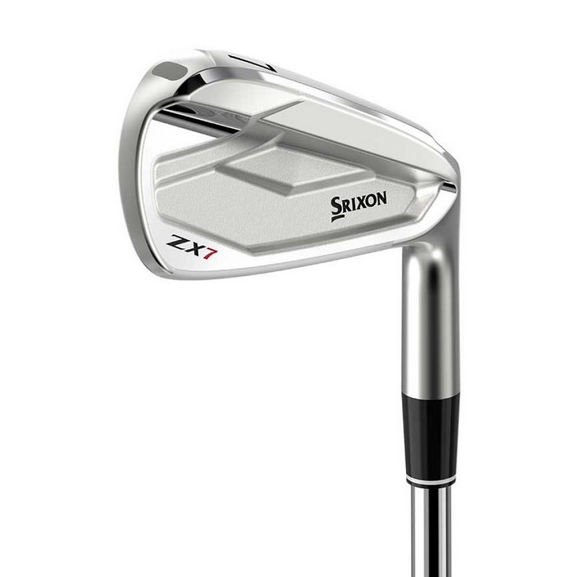
Srixon ZX7 Iron Set
- TECHNOLOGY
- TOUR CAVITY – Mass repositioned to ZX7’s sweet spot and perimeter provide a remarkably soft feel at impact and increased workability.
- PROGRESSIVE GROOVES- Grooves in the 8i through PW are sharper, narrower, and deeper for more spin and stopping power on approach shots into the green.
- TOUR V.T. SOLE – V-Shaped soles glide smoothly through turf, even if you strike slightly behind the ball. ZX7 Irons also feature the resurgence of our popular sole notches.
- MULTI-PIECE CONSTRUCTION – Tungsten in the toe of ZX7’s long and mid irons (3i-7i) increases MOI for more stability while the forged 1020 Carbon Steel body absorbs vibrations for an extremely soft feel.
$649.99
When Premium Craftsmanship Meets Pure Ball-Striking Bliss
I still remember the first time I held a Srixon ZX7 iron in my hands. The weight distribution felt intentional, purposeful—like shaking hands with a craftsman who’d spent years perfecting their trade. As someone who’s been chasing that elusive single-digit handicap for the better part of three years, I’ve cycled through enough equipment to fill a small pro shop. But something about these irons whispered promises I’d heard before but never quite experienced.
Let me take you on my personal journey with these remarkable clubs, answering every question I had before making the investment, and sharing insights I’ve gathered through hundreds of rounds and countless range sessions.
Understanding the Srixon ZX7: What Makes These Irons Special?
The key features of the Srixon ZX7 irons aren’t just marketing buzzwords—they’re tangible elements you feel from the moment of impact. At the heart of these irons lies something Srixon calls i-FORGED technology, which represents their most advanced forging process to date. This single-piece forging creates what I can only describe as the most supreme feeling I’ve experienced in an iron.
The compact blade design immediately caught my eye during my fitting session. These aren’t your grandfather’s blades, nor are they game-improvement irons masquerading as player’s clubs. The ZX7 occupies that sweet spot—a players iron with enough technology to inspire confidence without sacrificing workability.
What really sets these irons apart is the mainframe cup face design. This engineering marvel enlarges the flexible hitting area across the face, which translates to maintained ball speed even when I don’t catch it pure. And let’s be honest—none of us catch every shot pure, regardless of what we tell our playing partners.
The progressive grooves etched into the face aren’t uniform across the set. Srixon has optimized each iron’s groove configuration to induce the proper spin characteristics for that particular club. My short irons grab the green like velcro, while the long irons produce that penetrating, controlled flight I’ve always envied watching tour pros.
Are the ZX7 Irons Right for Low-Handicap Golfers?
This question kept me awake the night before I committed to the purchase. I’m currently hovering around an 8 handicap—not quite tour level, but competent enough to appreciate nuance in equipment. The Srixon ZX7 irons are absolutely suitable for low-handicap golfers, and here’s why I say that with confidence.
These irons demand respect. They won’t fix a poor swing or magically straighten out a snap hook. What they will do is reward quality strikes with feedback so pure you’ll know exactly where you caught the ball on the face. That immediate, honest feedback has transformed my practice sessions from mindless ball-beating into deliberate skill development.
During my fitting, the clubfitter explained that the ZX7 sits firmly in the “better player” category. The compact head size, minimal offset, and thin topline all communicate that these clubs expect a certain skill level. But here’s the beautiful part—they’re not punishing. The technology embedded in these irons provides just enough forgiveness to keep your misses playable while maintaining the shot-shaping capability better players crave.
I’ve played alongside single-digit handicappers who game the ZX7s, and I’ve also seen skilled 12-handicappers absolutely flourish with them. The common denominator? Consistent ball-striking and a desire for feedback that helps you improve rather than flattery that masks deficiencies.
ZX7 vs. ZX5: Understanding the Difference
Before I settled on the ZX7s, I spent considerable time comparing them to the ZX5 irons. This comparison deserves attention because many golfers find themselves torn between these two excellent options.
The ZX5 features a larger profile and more substantial cavity back design. During my fitting, I hit both models back-to-back, and the differences became immediately apparent. The ZX5 launched higher with less effort, produced tighter dispersion on my mishits, and felt more “automatic” through impact.
The ZX7, by contrast, demanded more precision but rewarded that precision with unmatched feel and workability. I could shape shots both ways with subtle changes in my swing path—something the ZX5 resisted. The ZX7’s slightly smaller sweet spot meant my mishits didn’t fly quite as far or straight as with the ZX5, but I knew exactly what I’d done wrong.
Weight distribution differs significantly between the models. The ZX5 incorporates more perimeter weighting through tungsten placement, boosting MOI (moment of inertia) for greater forgiveness. The ZX7 concentrates mass more centrally, which enhances feel and workability at the expense of some forgiveness.
My personal decision came down to this: I wanted irons that would force me to improve rather than irons that would accommodate my current limitations. The ZX7s challenged me, and six months later, my ball-striking has improved measurably because these clubs demand precision.
For golfers stuck between these models, I’d suggest this guideline: if you’re consistently breaking 85 and value feel over forgiveness, go ZX7. If you’re in that 85-95 range and want clubs that help you score better today while you work on your swing, the ZX5 makes tremendous sense.
Pricing and Value Proposition
Let’s talk money. The price of the Srixon ZX7 irons positioned them as a premium offering when I purchased them, typically retailing around $1,200-$1,400 for a 4-iron through pitching wedge set. That’s serious money, and I agonized over the investment.
However, comparing them to competitors like the Titleist T100 (which retails for $1,500+) or the TaylorMade P7MC (similarly priced around $1,400), the ZX7s actually represent exceptional value. You’re getting tour-level performance and craftsmanship at a price point slightly below the industry leaders.
What convinced me the investment was worthwhile? The customization options included in the base price. Srixon offers extensive shaft options, lie angle adjustments, loft tweaking, and grip selection—all fine-tuned during a professional fitting session. Many competitors charge premium fees for these services, but Srixon includes them as part of the experience.
I also factored in longevity. These forged irons are built to last. The high-quality materials and construction mean they’ll maintain their performance characteristics for years. I’ve put these through probably 75 rounds and countless range sessions, and they look barely broken in. The grooves remain sharp, the finish pristine, and the feel identical to day one.
For those seeking better pricing, I’d recommend checking with authorized retailers during seasonal promotions. I’ve seen the ZX7s discounted 15-20% during certain periods, which makes them an absolute steal for this level of performance.
Where to Buy Srixon ZX7 Irons Online
Finding the right purchasing venue proved more important than I initially realized. Where you buy Srixon ZX7 irons online significantly impacts your overall experience, especially regarding fitting services and warranty coverage.
My first stop was the official Srixon website, which I highly recommend for anyone serious about these irons. You can see details about their complete lineup, technology explanations, and find authorized retailers in your area. The official site also provides the most comprehensive specifications and educational content about what makes these irons special.
I ultimately purchased through an authorized Srixon retailer who offered professional fitting services. This proved invaluable because proper fitting transforms good irons into great irons specifically for your swing. The fitter analyzed my swing speed, attack angle, ball flight, and dispersion pattern to dial in the perfect shaft, lie angle, and loft configuration.
Major online golf retailers like Golf Galaxy, PGA Tour Superstore, and Global Golf all carry Srixon products with fitting services. However, I’d caution against purchasing from unauthorized third-party sellers or auction sites. You risk receiving counterfeit products, lose warranty protection, and forfeit access to Srixon’s customer service.
Team Srixon membership also provides benefits worth considering. Joining gives you access to VIP events, early equipment releases, discounts on future purchases, and a community of fellow Srixon enthusiasts. The points system rewards every purchase, eventually unlocking significant perks.
ZX7 vs. ZX4: Another Important Comparison
While most discussions focus on the ZX7 versus ZX5 debate, understanding the difference between the Srixon ZX7 and ZX4 irons helps complete the picture of Srixon’s iron lineup philosophy.
The ZX4 represents Srixon’s most forgiving iron, designed specifically for moderate to slower swing speeds seeking maximum distance and forgiveness. These irons feature substantially larger heads, wider soles, and aggressive perimeter weighting. The ZX4 launches balls higher and longer with less effort, making them ideal for golfers who struggle with consistent contact or need help generating distance.
In contrast, the ZX7 assumes you generate adequate swing speed and make relatively consistent contact. It prioritizes precision, feel, and shot-shaping over raw distance and mishit forgiveness. The compact head and thin sole allow skilled players to manipulate trajectory and shape in ways the ZX4 simply won’t accommodate.
I tested the ZX4 out of curiosity during my fitting, and while impressive for its intended audience, it felt entirely wrong for my game. Shots launched too high, I couldn’t work the ball effectively, and the larger head looked distracting at address. For golfers who need that profile, however, the ZX4 delivers exactly what it promises.
Consider the ZX4 if you’re above a 15 handicap, struggle with consistent contact, or have swing speeds below 85 mph with a 7-iron. Choose the ZX7 if you’re a single-digit handicapper or aspiring to be one, value feedback and workability, and generate adequate speed to optimize these irons’ design.
Loft Chart and Specifications
Understanding the loft chart for the Srixon ZX7 irons helped me make informed decisions about gapping throughout my bag. Srixon has maintained relatively traditional lofts in the ZX7 lineup, which I appreciate given the current industry trend toward jacked lofts that create awkward gaps.
Here’s the standard loft configuration I received:
- 4-iron: 23 degrees
- 5-iron: 26 degrees
- 6-iron: 29 degrees
- 7-iron: 33 degrees
- 8-iron: 37 degrees
- 9-iron: 41 degrees
- Pitching Wedge: 45 degrees
These lofts are approximately 2-3 degrees stronger than traditional blade lofts but not aggressively so. The reasonable loft progression creates consistent 10-15 yard gaps throughout my set, which simplifies club selection and eliminates awkward in-between distances.
What I particularly appreciate is Srixon’s willingness to adjust lofts during custom fitting. My fitter bent my 9-iron and pitching wedge one degree weak to better accommodate my wedge setup. This level of customization ensures seamless integration with the rest of your bag.
The lie angles also deserve mention. Standard lies work for most golfers, but the ability to adjust them during fitting means you’ll make pure contact more consistently. My clubs came 2 degrees upright based on my height and swing characteristics—a seemingly small change that significantly improved my strike quality.
Real-World Reviews and Performance Feedback
Before purchasing, I scoured the internet for reviews of the Srixon ZX7 irons from both professional reviewers and everyday golfers. The consensus proved remarkably consistent: these irons deliver exceptional feel and performance but demand respect.
Professional reviews from outlets like Golf Digest, MyGolfSpy, and Golf.com universally praised the phenomenal feel and feedback. Testers noted that impact with the ZX7s provides immediate, accurate information about strike location. The sound at impact—a crisp, authoritative click—became a recurring highlight in reviews.
Distance control emerged as another strength in professional testing. The ZX7s produced tight distance gaps with minimal variance, even among different testers with varying swing speeds. This consistency matters enormously when you’re standing 150 yards from a pin and need to know your 7-iron carries exactly 165 yards, not 160-170.
Amateur reviews proved equally enthusiastic, though several common themes emerged. Golfers transitioning from game-improvement irons experienced an adjustment period as they adapted to the increased feedback and reduced forgiveness. However, nearly all reported improved ball-striking after this adjustment phase.
One reviewer on a popular golf forum perfectly captured my experience: “The ZX7s don’t lie to you. They’ll tell you exactly what you did wrong, but they’ll also reward quality strikes better than anything else I’ve played.”
The few criticisms I encountered focused on the learning curve for mid-handicappers and the fact that these irons don’t magically add distance. If you’re seeking extra yards, Srixon offers other models. The ZX7s prioritize control and consistency over raw distance.
Forgiveness for Mid-Handicap Players
The question of how forgiving the Srixon ZX7 irons are for mid-handicap players deserves thoughtful consideration because the answer isn’t simple.
First, let’s define forgiveness in practical terms. A forgiving iron minimizes distance loss and directional deviation on off-center strikes. It helps your mishits go nearly as far and relatively straight compared to pure strikes. By this definition, the ZX7s offer moderate forgiveness—significantly more than traditional blades but noticeably less than game-improvement designs.
During my testing, I hit intentional toe and heel strikes to gauge forgiveness. Toe strikes lost approximately 8-10 yards of distance and started slightly right of target. Heel strikes showed similar distance loss and started left. Compare this to true blades where mishits might lose 15-20 yards and go severely offline, or game-improvement irons where mishits might only lose 3-5 yards.
For mid-handicap players (roughly 10-18 handicap), the ZX7s occupy interesting territory. If you’re a skilled ball-striker who simply makes occasional mental errors leading to high scores, these irons could absolutely work. The feedback will help you improve your strike quality, potentially lowering your handicap.
However, if your mid-handicap stems from inconsistent contact—if you’re frequently hitting it fat, thin, or all over the face—I’d honestly recommend starting with the ZX5s. The additional forgiveness will help you score better today while you work on your swing mechanics.
My personal recommendation: if you consistently strike the ball reasonably well and shoot in the low-to-mid 80s, give the ZX7s serious consideration. If you’re shooting 90-95 with variable contact quality, develop your ball-striking with more forgiving irons first, then transition to the ZX7s as your skills improve.
Tour Players and Professional Endorsements
Knowing what professional golfers use the Srixon ZX7 irons provided validation when I was considering the purchase. If these clubs perform under the immense pressure of professional competition, they’ll certainly handle my weekend Nassau.
Hideki Matsuyama, the 2021 Masters champion, stands as Srixon’s most prominent tour staffer. Watching him stripe iron shots during major championships with equipment I could theoretically game myself created a connection I’d never felt with other brands. Matsuyama’s ball-striking prowess is legendary on tour, and he trusts Srixon equipment for the most important shots of his career.
Beyond Matsuyama, several other tour professionals have the ZX7s or their predecessors in the bag. These players value the combination of workability and feedback that these irons provide. When your livelihood depends on hitting precise shots under pressure, you choose equipment that responds predictably to your intentions.
What struck me during research was that many tour pros combine the ZX7s with the more forgiving ZX5s in a combo set. They might play ZX7s from 6-iron down through the wedges for maximum control, while using ZX5 long irons for easier launch and more forgiveness. This strategy makes tremendous sense and is something I’m considering for my next iron refresh.
The professional validation matters not because I’m trying to replicate tour performance—I’m realistic about my abilities—but because it confirms these irons function at the highest level. If the ZX7s work for players making millions based on shot precision, they’ll certainly serve my needs admirably.
Distance, Accuracy, and On-Course Performance
Let’s address the practical question every golfer asks: how do the Srixon ZX7 irons perform in terms of distance and accuracy?
Distance-wise, the ZX7s deliver what I’d call “honest” yardages. They’re not designed to be the longest irons in your foursome; they’re designed to hit your targets consistently. My 7-iron carries about 165 yards—not exceptional, but reliable. I’ve hit thousands of 7-irons with these clubs, and the variance is remarkably small, typically within 3-4 yards.
This consistency matters more than raw distance. During a recent round, I faced a 155-yard approach into a tucked pin. I knew my 8-iron carries 155 yards because the ZX7s deliver that distance repeatedly. I made my normal swing, the ball landed four feet from the hole, and I made birdie. That’s the real-world value of consistent distance control.
Accuracy improvements came gradually as I learned to trust the feedback these irons provide. The ZX7s helped me identify and correct a slight heel bias in my strike pattern. By working with my coach and using the honest feedback from these clubs, I’ve tightened my dispersion pattern considerably. Where I once might miss greens left or right by 15-20 yards, I’m now typically within 10 yards of my target line.
The trajectory control these irons offer has transformed my approach play. I can flight the ball low under wind, hit it high to carry hazards, or produce a neutral flight when conditions allow. This versatility comes from the compact head design and responsive face technology.
Spin characteristics impressed me immediately. My approach shots check up aggressively, especially from the scoring clubs (8-iron through wedges). The progressive groove design and Spin Skin coating work together to generate friction between ball and face, producing the spin necessary for greenside control.
Materials and Construction Quality
Understanding what materials are used in the construction of the Srixon ZX7 irons deepened my appreciation for the craftsmanship I’d invested in.
The single-piece forging represents the heart of these irons’ construction. Srixon uses a process they’ve refined over decades, heating and shaping each iron from a single billet of premium carbon steel. This forging process produces a grain flow through the metal that enhances both feel and durability.
The i-FORGED technology specifically creates a more compact grain structure in the clubhead, which translates to improved feel at impact. When you strike a ball with properly forged steel, the sensation travels through the shaft to your hands with remarkable clarity. It’s this sensation that makes forged irons so coveted among better players.
Srixon incorporates tungsten weighting in strategic locations within the ZX7s. This dense material allows engineers to position mass precisely where it benefits performance most. The tungsten helps optimize launch conditions while maintaining the compact profile that better players prefer.
The mainframe cup face deserves special attention. This construction method creates a larger, more flexible hitting area compared to traditional forging. The face wraps around the sole slightly, allowing the entire structure to flex at impact. This flexing increases ball speed and preserves distance on mishits—the key to the ZX7’s forgiveness.
Premium finishes protect the clubheads while providing aesthetic appeal. My set features Srixon’s Tour V.T. Sole, which reduces turf drag and improves versatility from various lies. The chrome finish has proven remarkably durable, resisting scratches and wear despite extensive use.
Customization Options Available
One of my favorite aspects of purchasing these irons was discovering how the Srixon ZX7 irons can be customized with different shafts and grips.
Shaft selection proved more impactful than I anticipated. Srixon offers numerous stock shaft options across steel and graphite, each producing different launch, spin, and feel characteristics. I tested Dynamic Gold, Project X, Nippon Modus³, and KBS Tour shafts during my fitting.
I ultimately chose Nippon Modus³ Tour 120 shafts in stiff flex. These lightweight steel shafts (120 grams) provided a smooth feel while producing optimal launch and spin for my swing. The fitter explained that my relatively aggressive downward strike angle with irons benefited from the mid-launch, mid-spin characteristics of these shafts.
Grip customization seems minor but affects every swing you make. I selected Golf Pride MCC grips in standard size, which combine rubber and cord for optimal traction in all conditions. The slightly tacky feel suits my preference, and the cord sections provide security during humid summer rounds.
Lie and loft adjustments completed my custom fitting. As mentioned earlier, my clubs came 2 degrees upright to accommodate my height and posture. This adjustment ensures the sole rests flat at impact, promoting centered contact. The minor loft adjustments in my wedges created perfect gapping with my other scoring clubs.
What impressed me most was Srixon’s willingness to accommodate these customizations as part of the standard purchase process. Many manufacturers charge premium fees for custom work, but Srixon includes it as a standard service, reflecting their commitment to proper fitting.
Release Timeline and Latest Innovations
Understanding the release date of the Srixon ZX7 irons helps contextualize where these clubs sit in Srixon’s product lifecycle.
The ZX7 irons launched in late 2020 as part of Srixon’s broader ZX series introduction. This means they’ve been on the market for approximately five years as of this writing. In the golf equipment world, that positions them as mature products with proven track records rather than unproven new technology.
Some golfers hesitate to purchase equipment that’s been available for several years, fearing it’s outdated. I’d argue the opposite with the ZX7s. Five years of professional tour use, countless amateur rounds, and extensive testing have validated these irons’ design and performance. There are no surprises, no recalls, no widespread quality issues—just reliable performance backed by real-world data.
Srixon typically refreshes their iron lineup every 3-4 years, which means new ZX irons are likely on the horizon. However, this doesn’t diminish the ZX7’s value. Golf club technology evolves gradually, not revolutionarily. The next generation might offer incremental improvements, but the current ZX7s will remain highly competitive and capable.
The i-FORGED technology debuted with this generation and represents a significant advancement in forging processes. Subsequent models will likely build upon rather than replace this technology, meaning your ZX7s won’t suddenly become obsolete.
From a value perspective, purchasing current-generation ZX7s while retailers clear inventory before new releases can yield exceptional deals. I’ve seen sets discounted 20-30% during these transitions, making tour-level irons accessible at mid-tier prices.
Comparison to Competitive Offerings
Every serious equipment purchase demands competitive analysis, so let’s examine how the Srixon ZX7 irons compare to competitors like Titleist T100 or TaylorMade P7MC.
The Titleist T100 represents perhaps the most direct competition to the ZX7. Both target accomplished ball-strikers seeking compact profiles and enhanced feel. During back-to-back testing, I found the T100 slightly more forgiving on mishits but also slightly less responsive to intentional shot-shaping. The T100 felt more “stable” through impact, while the ZX7 felt more “alive.”
Price considerations favor the ZX7. The T100 typically retails $200-300 higher than the ZX7 for equivalent sets. Both offer excellent customization options, though Titleist’s fitting process enjoys a slight edge in availability through their extensive network.
Sound and feel differentiate these irons noticeably. The T100 produces a muted, solid sound at impact—pleasant but understated. The ZX7 delivers a crisper, more resonant sound that I personally prefer. Feel is inherently subjective, but I found the ZX7’s feedback more communicative.
The TaylorMade P7MC enters the conversation as another muscleback-style players iron. These clubs feature even more compact heads than the ZX7, appealing to purists seeking blade-like profiles. During testing, I found the P7MC beautiful but demanding—slightly less forgiving than the ZX7 with similar workability.
Price-wise, the P7MC sits comparable to the ZX7, making cost a neutral factor in the decision. TaylorMade’s shaft options and fitting infrastructure rival Srixon’s, providing similar customization opportunities.
Ultimately, my decision came down to feel and value. The ZX7s provided the best combination of precise feedback, playable forgiveness, and reasonable pricing among the competitors I tested. Your preferences might differ, which is why proper fitting and testing remain essential.
Forged Construction and Design Philosophy
A common question concerns whether the Srixon ZX7 irons are forged or cavity back—and the answer illuminates Srixon’s design philosophy.
The ZX7s are forged irons featuring what I’d call a “compact cavity back” design. This might seem contradictory to golfers who associate forged clubs with blades and cavity backs with game-improvement irons, but modern manufacturing allows for both characteristics in a single iron.
Forging refers to the manufacturing process: shaping heated metal through compression rather than casting molten metal in molds. Forged clubs typically offer superior feel because the grain structure created during forging transmits vibrations more clearly. The single-piece forging in the ZX7s creates this exceptional feel I’ve praised throughout this review.
Cavity back describes the head design: removing weight from behind the hitting area and redistributing it around the perimeter. This increases MOI (moment of inertia), which enhances forgiveness. The ZX7’s cavity is relatively shallow, providing moderate forgiveness while maintaining the compact profile better players prefer.
This combination—forged construction with compact cavity design—represents the modern evolution of players irons. You get blade-like feel and workability with enough forgiveness to keep mishits playable. It’s the best of both worlds for skilled golfers who aren’t tour professionals.
Pure blade enthusiasts might find even the ZX7’s shallow cavity too forgiving, preferring the challenge and feedback of true muscleback designs. Pure game-improvement seekers will likely find the ZX7s too demanding, benefiting more from deeper cavities and perimeter weighting. But for golfers in that sweet spot—accomplished ball-strikers seeking performance and feel—this design philosophy hits the target perfectly.
Ball Control and Spin Performance
One of my primary considerations when evaluating these irons was how the Srixon ZX7 improves ball control and spin.
Spin control begins with the progressive groove design. Srixon doesn’t use identical grooves across all irons; instead, they optimize groove width, depth, and edge sharpness for each club’s intended function. The long irons feature grooves designed for optimal launch and moderate spin, while the scoring irons incorporate more aggressive grooves for maximum greenside control.
The Spin Skin coating deserves credit for exceptional spin performance. This proprietary surface treatment increases friction between the clubface and ball cover at impact, particularly on shorter shots where spin matters most. During wet conditions or from the rough, this coating helps maintain spin levels that would diminish with conventional finishes.
My personal experience confirms these technologies work as advertised. Approach shots from 100-150 yards check up aggressively, often spinning back 5-10 feet from their initial landing spot on receptive greens. This spin control has dramatically improved my scoring, as I can now attack tucked pins with confidence that the ball will stop quickly.
Ball flight control extends beyond just spin. The compact head design and minimal offset allow me to shape shots reliably. I can hit a controlled fade into right pins by opening my stance slightly and making my normal swing. For left pins, I’ll close my stance and produce a gentle draw. The ZX7s respond predictably to these setup adjustments without requiring dramatic swing alterations.
Trajectory manipulation also factors into ball control. I can hood the club slightly for a penetrating flight under wind or add loft for higher approaches that land softly. This versatility proves invaluable for scoring during challenging conditions or when facing demanding pin positions.
Feel, Sound, and Sensory Feedback
Perhaps no characteristic matters more to better players than the feedback on the feel and sound of the Srixon ZX7 irons.
Feel through impact defies simple description—it’s something you must experience to fully appreciate. Pure strikes produce what I can only describe as “buttery” sensation, a soft compression that communicates perfect contact immediately. The ball seems to melt into the face briefly before launching with precisely the trajectory and spin you intended.
Mishits provide equally valuable feedback without being punishing. Toe strikes produce a slightly harder, higher-pitched sensation. Heel strikes feel marginally softer and deaden slightly. Thin strikes create a sharp, quick feeling, while fat strikes produce a heavy, muffled sensation. This honest feedback accelerates improvement because you know exactly what happened on every swing.
The sound at impact contributes significantly to the overall experience. Pure strikes create a crisp, authoritative “click” that resonates briefly before fading. It’s not the muted thud of game-improvement irons nor the harsh crack of some blades—it’s a perfectly balanced tone that reinforces quality contact.
During rounds, I’ve noticed how sound affects my confidence. When I hear that perfect click, I know the ball will fly exactly as intended before I even look up. This auditory feedback creates a positive reinforcement loop that builds confidence throughout the round.
Environmental conditions affect sound and feel minimally with the ZX7s. Cold weather marginally dulls the sensation, but quality strikes still feel recognizably pure. Wet conditions don’t dramatically alter the sound, though balls obviously don’t spin quite as much from wet grass.
Promotions, Discounts, and Value Timing
Savvy shoppers ask about promotions or discounts available for Srixon ZX7 irons, and timing your purchase wisely can save significant money.
Seasonal patterns in golf retail create predictable discount opportunities. Late fall through winter typically sees aggressive pricing as retailers clear current inventory before spring releases. I’ve observed ZX7 sets discounted 15-25% during November through January, particularly after the holiday shopping season.
Spring demo days at golf retailers provide another opportunity. Many stores offer event-day discounts on equipment purchased after fitting sessions. While discounts might be more modest (10-15%), you also receive valuable professional fitting services.
Trade-in programs offered by major retailers can effectively discount your purchase. I traded my previous irons toward my ZX7s, receiving fair market value that reduced my out-of-pocket cost by approximately $300. Combined with seasonal pricing, this strategy maximized value.
Team Srixon membership provides ongoing benefits worth considering. While membership itself isn’t discounted, the points earned on purchases and access to member-exclusive promotions create long-term value for committed Srixon users.
I’d advise avoiding unauthorized sellers offering suspiciously deep discounts. Counterfeit golf equipment represents a genuine problem, and purchasing from questionable sources puts you at risk of receiving fake clubs or losing warranty protection. The modest savings aren’t worth these risks.
Patient shoppers who monitor pricing across multiple retailers and wait for optimal timing can potentially save $200-400 on a ZX7 set compared to impulse purchasing at full retail. Given the significant initial investment, this patience pays substantial dividends.
Off-Center Hit Performance
For honest evaluation, we must address how the Srixon ZX7 irons perform on off-center hits—because none of us catch every shot pure.
Toe strikes represent my most common mishit pattern. With the ZX7s, balls struck toward the toe typically lose 8-10 yards of carry distance and start 5-8 yards right of my intended target line (for right-handed golfers). These shots still reach the green on most approach situations, though they’ll likely miss the target by enough to require two-putting.
Compare this to true blade irons, where toe strikes might lose 15-20 yards and fly wildly off-line, or game-improvement irons, where toe strikes might only lose 3-5 yards and fly nearly straight. The ZX7s occupy the middle ground—honest consequences that keep you playing while providing clear feedback.
Heel strikes show similar patterns. Distance loss approximates 8-10 yards with shots starting 5-8 yards left of target. Again, these shots remain playable while clearly communicating the strike location.
Thin strikes (hitting the ball’s equator rather than below it) lose less distance than toe or heel mishits but fly with reduced spin and trajectory. These shots produce the dreaded “knuckleball” flight—low launching with minimal spin, making distance control challenging. However, they typically fly relatively straight, limiting the damage.
Fat strikes (hitting ground before ball) obviously represent the worst outcome with any iron. The ZX7s don’t magically eliminate the consequences of hitting ground first, though the V.T. Sole design does help the club glide through turf rather than digging. Fat strikes still lose substantial distance and require acceptance and recovery rather than expectation of positive outcomes.
Sweet spot size on the ZX7s is larger than traditional blades but smaller than game-improvement designs. This translates to roughly a quarter-sized area on the face where strikes produce optimal results. Catches within about a half-inch of center still perform admirably, though not quite as purely as center strikes.
Final Reflections: Are the ZX7s Right for You?
After six months and approximately 75 rounds with the Srixon ZX7 irons, I can confidently assess whether these clubs deliver on their promises.
For the right golfer, these irons are absolutely exceptional. That right golfer is someone who:
- Shoots consistently in the 70s to low-mid 80s
- Values precise feedback over flattering forgiveness
- Generates adequate swing speed (85+ mph with a 7-iron)
- Makes reasonably consistent, solid contact
- Wants to improve through honest equipment feedback
- Appreciates craftsmanship and premium feel
These irons transformed my approach play by providing the consistency and control I needed to attack pins with confidence. My greens in regulation percentage increased measurably, and my proximity to the hole from 100-175 yards improved significantly. The feedback helped me identify and correct swing flaws that previous, more forgiving irons had masked.
The investment represented substantial money for me, but I genuinely believe the ZX7s deliver exceptional value at their price point. The combination of tour-level performance, extensive customization options, and proven durability makes them competitive with offerings costing significantly more.
For golfers outside the target demographic, I’d honestly recommend exploring other Srixon options. The ZX5 provides more forgiveness while maintaining excellent feel. The ZX4 offers maximum assistance for consistent contact and distance. Srixon has created a lineup that serves golfers across the skill spectrum—choose the model that matches your current abilities and immediate needs.
These irons demanded that I improve, and I responded to that challenge. Six months ago, I was a streaky 8-handicap who occasionally shot 77 but more frequently shot 83-85. Today, I’m a more consistent 6-handicap building toward breaking into single digits. The ZX7s didn’t create this improvement—my practice and coaching did—but they certainly accelerated the process through their honest, helpful feedback.
Would I make this purchase again? Absolutely, without hesitation. The ZX7s deliver exactly what they promise: tour-level feel, playable forgiveness, and the tools necessary for skilled golfers to play their best golf. They’ve become trusted partners in my journey toward lower scores, and I anticipate keeping them in my bag for years to come.
If you’re a skilled ball-striker seeking irons that will challenge and reward you in equal measure, I encourage you to test the Srixon ZX7 irons for yourself. Visit an authorized fitter, hit a few dozen shots, and feel the difference that proper forging and thoughtful engineering create. These irons might just transform your game the way they’ve transformed mine.
The journey continues, the handicap drops slowly but surely, and with the ZX7s in my bag, I face every approach shot with confidence that the equipment will perform exactly as I need it to. That confidence proves invaluable when you’re standing over a shot that matters, trusting your swing and your tools to deliver the performance required.
Welcome to the world of Srixon—where innovation meets tradition, and where golfers who demand excellence find equipment worthy of their dedication to this beautiful, challenging game we love.